Self-hosted homelab
A multi-server homelab built from rescued hardware — evolving from a single Samba share into a hardened, WAN-exposed personal cloud operating behind CGNAT via Cloudflare Tunnel.
 Peppermint
 '/%3e%3cuse%20xlink:href='%23friend'%20transform='rotate(240,50,50)'/%3e%3c/svg%3e) Ubuntu
Ubuntu  Debian
  Arch Linux
  Samba
Samba  Cloudflare Tunnel
  SSH
SSH  Docker
 %20-%20-%20All%20copyright%20belongs%20to%20the%20Jellyfin%20contributors;%20a%20full%20list%20can%20-%20be%20found%20in%20the%20file%20CONTRIBUTORS.md%20-%20-%20This%20work%20is%20licensed%20under%20the%20Creative%20Commons%20Attribution-ShareAlike%204.0%20International%20License.%20-%20To%20view%20a%20copy%20of%20this%20license,%20visit%20http://creativecommons.org/licenses/by-sa/4.0/.%20-%20*****%20END%20LICENSE%20BLOCK%20*****%20--%3e%3csvg%20version='1.1'%20id='icon-transparent'%20xmlns='http://www.w3.org/2000/svg'%20xmlns:xlink='http://www.w3.org/1999/xlink'%20viewBox='0%200%20512%20512'%3e%3cdefs%3e%3clinearGradient%20id='linear-gradient'%20gradientUnits='userSpaceOnUse'%20x1='110.25'%20y1='213.3'%20x2='496.14'%20y2='436.09'%3e%3cstop%20offset='0'%20style='stop-color:%23AA5CC3'/%3e%3cstop%20offset='1'%20style='stop-color:%2300A4DC'/%3e%3c/linearGradient%3e%3c/defs%3e%3ctitle%3eicon-transparent%3c/title%3e%3cg%20id='icon-transparent'%3e%3cpath%20id='inner-shape'%20d='M256,201.6c-20.4,0-86.2,119.3-76.2,139.4s142.5,19.9,152.4,0S276.5,201.6,256,201.6z'%20fill='url(%23linear-gradient)'/%3e%3cpath%20id='outer-shape'%20d='M256,23.3c-61.6,0-259.8,359.4-229.6,420.1s429.3,60,459.2,0S317.6,23.3,256,23.3z%20M406.5,390.8c-19.6,39.3-281.1,39.8-300.9,0s110.1-275.3,150.4-275.3S426.1,351.4,406.5,390.8z'%20fill='url(%23linear-gradient)'/%3e%3c/g%3e%3c/svg%3e) Jellyfin
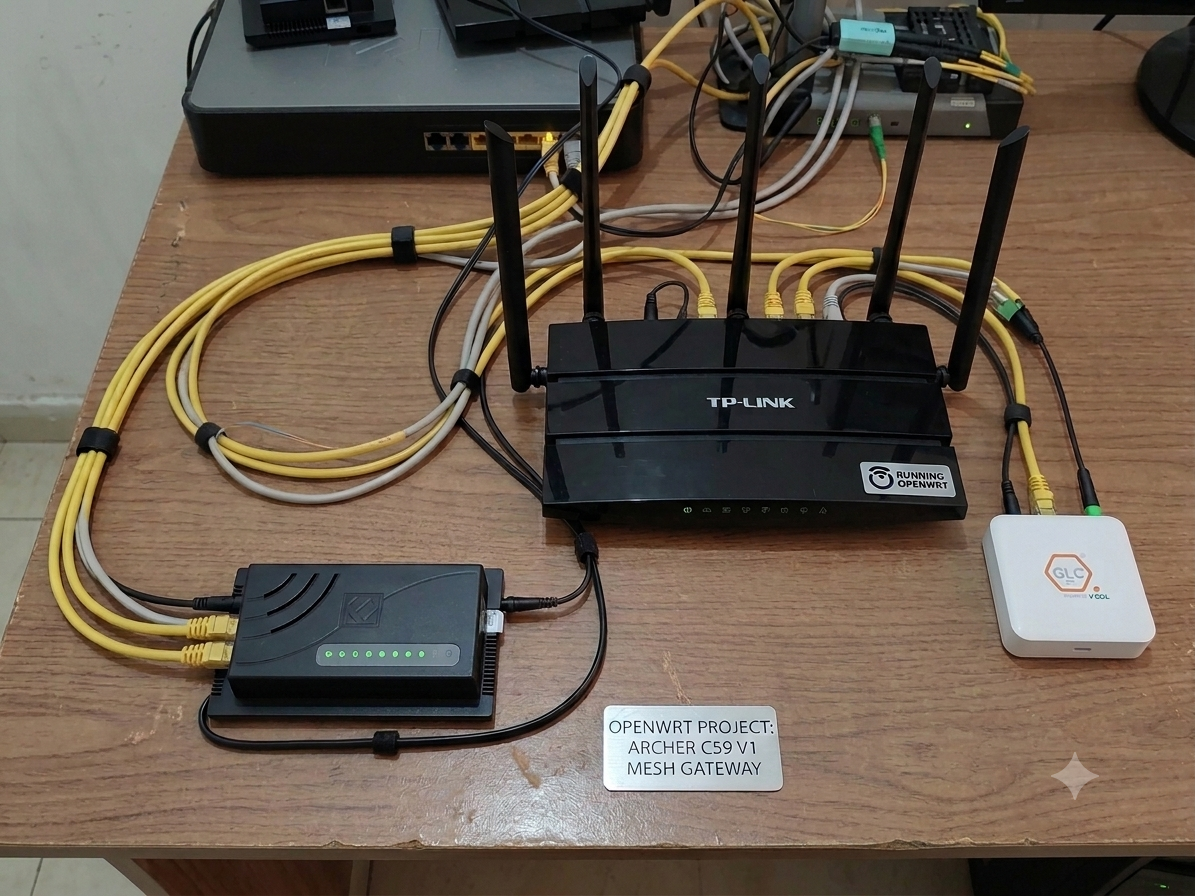
Jellyfin  OpenWrt
 The rescue
Two machines headed for disposal — a sluggish, unpatched Windows 7 box and an old Windows XP machine — were cleaned, re-pasted, and restored to working condition. They started as a testbed for anything I didn't want to run on my main computer.
First contact with Linux
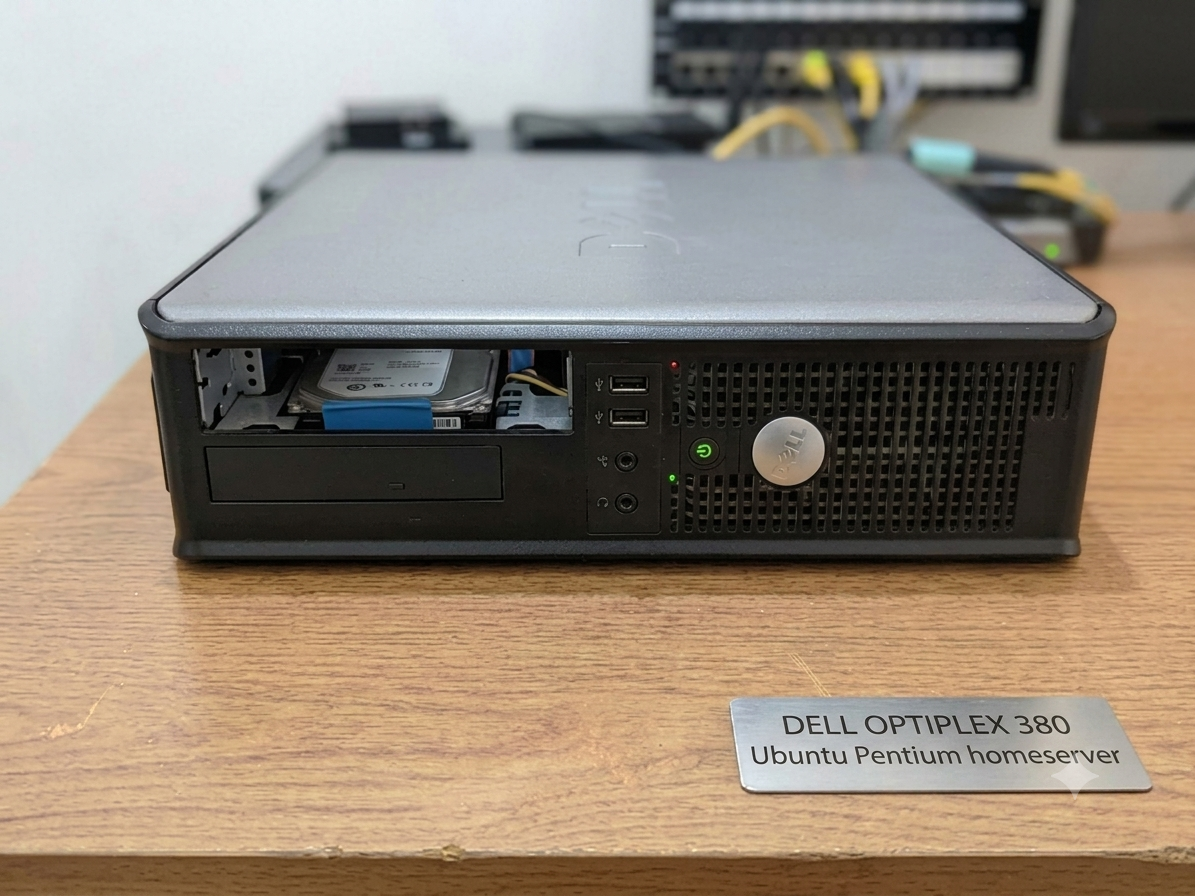
Pressed into service as a daily driver, the Pentium E5400 (2 GB RAM, 500 GB HDD) ran Peppermint Linux. This was where the fundamentals clicked: the terminal, package repositories, and how distributions and flavors actually differ.
From PC to NAS
The box was provisioned as a NAS running Ubuntu 24.04 LTS. Samba — configured from scratch over several late nights — delivered network file storage at speeds well beyond the internet connection, alongside a local Plex server. The first real, tangible understanding of how a private LAN behaves.
Hitting the walls
Two obstacles surfaced. A dynamic local IP meant an arp-scan or nmap sweep to find the server each time — which led to OpenWrt for static DHCP leases by MAC, and, in parallel, deep into network security: packet captures, WPA2/WPA3, and hash cracking. The larger wall was , which made conventional port forwarding impossible.
Maxing out the hardware
By mid-2025 the pentium host was pushed to its ceiling: 4 GB of DDR3, the most the board would accept. A modest bump on paper, but enough headroom to run Samba, Plex, and the tunneling stack side by side on hardware that was never meant to be a server.
Breaking through CGNAT
resolved the constraint. Reusing the domain bought for this portfolio, a subdomain was pointed at the server's SSH port, making the host reachable from the WAN despite . It was then hardened: SSH moved off its default port, key-only authentication, passwords disabled.
The Debian dinosaur
With the workflow established, the old XP machine was rebuilt on Debian Trixie — single core, 512 MB of RAM, a 20-year-old disk with roughly 1,000 hours of use. Hardened and tunneled, it became a personal cloud reachable only via SSH forwarding: proof that durable hardware and a lean, secure OS still hold up.
A self-hosted personal cloud
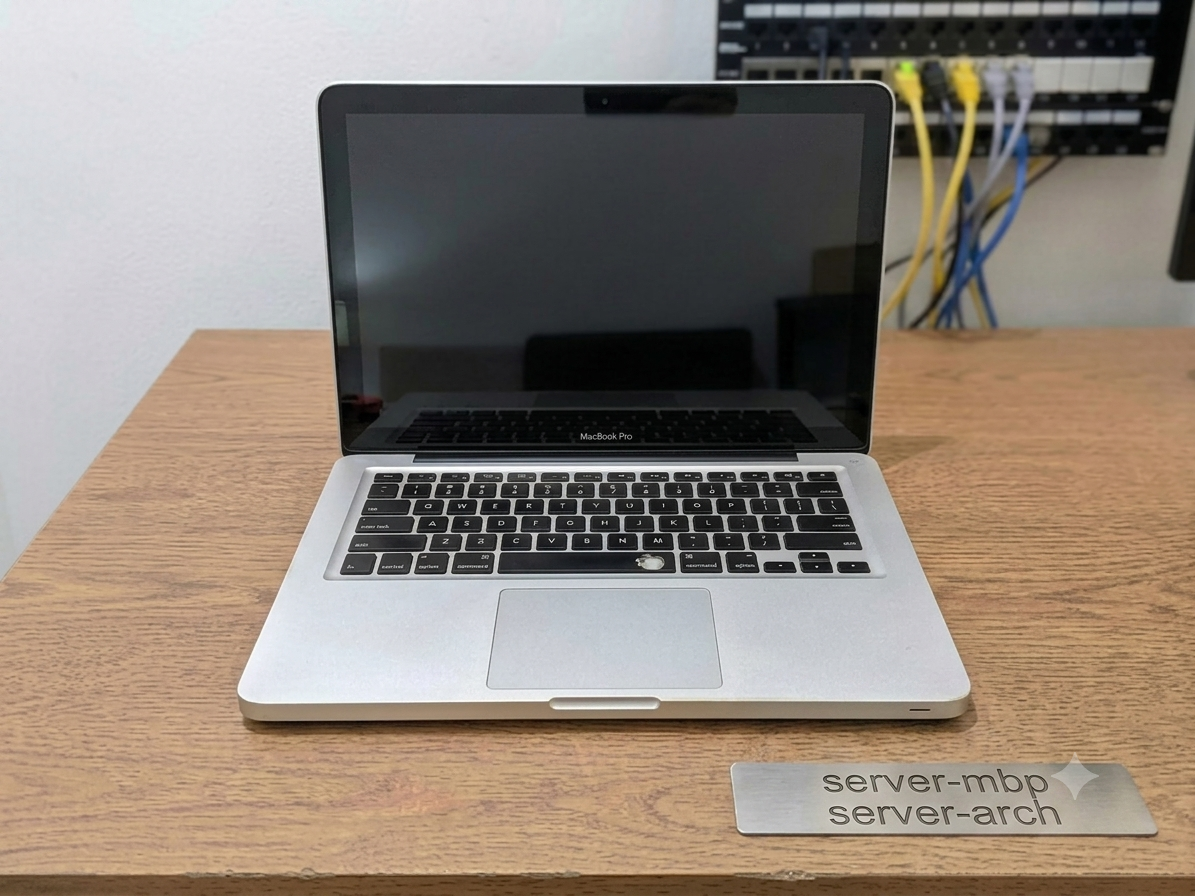
Jellyfin, exposed on its own subdomain and paired with yt-dlp for a lossless FLAC music library, replaced a Spotify subscription. A 2011 MacBook Pro joined the fleet on Arch Linux — its SSD and 10 GB of RAM serving a PostgreSQL and Redis stack in Docker Compose for a collaborative database project.
 Built by Luca Lombardo — Pilar, Buenos Aires, AR